
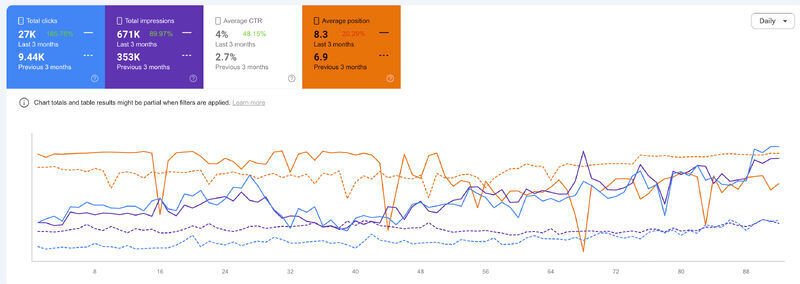
📊 +185.78% clicks, 9.44K → 27K
📊 +89.97% impressions, 353K → 671K
📊 +48.15% CTR improvement, 2.7% → 4.0%
📊 Rankings influenced through targeted link placement, not volume
Can a structured link building strategy be applied to home improvement and contractor websites the same way it’s applied to larger industries?
The results below belong to another UK roofing & home improvement brand’s service landing pages. Over the last three days, I’ve shared three different home improvement websites we’ve worked on. The first two were straightforward niche edit and guest post campaigns. This third one is different — we moved rankings for seasonally critical service pages (think “emergency roof repair” or “boiler servicing” in peak season) using a more deliberate link strategy.
This is a rare case where I openly walk through how a backlink campaign actually works behind the scenes.
What we actually do
We do not build random links on whatever site will take them. We run what I call Link Sprints.
Instead of chasing one-off links for a single client site, we map out the relevant home improvement ecosystem — DIY blogs, trade forums, contractor directories, landscaping and renovation sites — and build a coordinated outreach campaign across multiple genuinely relevant publishers at once. This positions the client’s business as a recurring, trusted reference point within that niche, rather than a single isolated mention.
This consolidates authority and trust naturally around the client’s site, instead of relying on one or two high-effort placements.
Outreach is paced, not rushed. New guest posts and niche edits go live on a steady schedule, so the link profile grows the way a genuinely well-known business’s links would grow — gradually, from multiple sources, over time — rather than in an unnatural sudden burst that can look manipulative to Google.
We also prioritise topical relevance over volume: a single link from a genuinely respected roofing or trade publication carries more weight than a dozen links from unrelated, low-quality directories. Older placements continue to hold value and keep sending relevant referral traffic months later, because they sit on real sites with real readers — not throwaway pages built only to host a link.